
一般将来时
①一般现在时基础结构
He is going to be/ he is gonna be xxx
The boy is going to arrive on time.
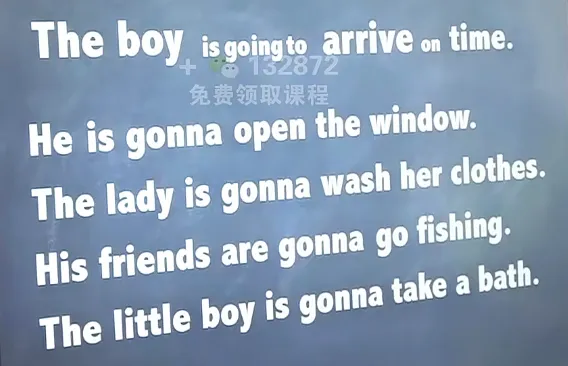
Summary:陈述句
- 主语 + be going to + be + 名词 --- 主语将成为xxx
状态 - 主语 + be going to + 动词短语 --- 主语将做xx
动作
Mr. Sun: 系统学习的结果是系统的忘记
一般将来时不只表达将来
Mom: How about your trip tomorrow?
Son: We're gonna have a lot of fun.
==> 表达预期而不只是“将来”的含义
Boss: You are gonna screw up the business.
==> 表达预警(真搞砸了可能就欲哭无泪了)
Practice
I'm gonna write you a letter soon.
Your brother and I are gonna miss you at Christmas.
You know she is gonna give it up.
That's gonna be a hard day.
So, it's just gonna be a surprise each week.
She's gonna do us a favor.
You're gonna love the short movie.
We are gonna be friedns for ever.
将来时不仅说的是将要发生的事,也有可能是盼望发生的事
You're not gonna play musci really loud.
You're not gonna xxx
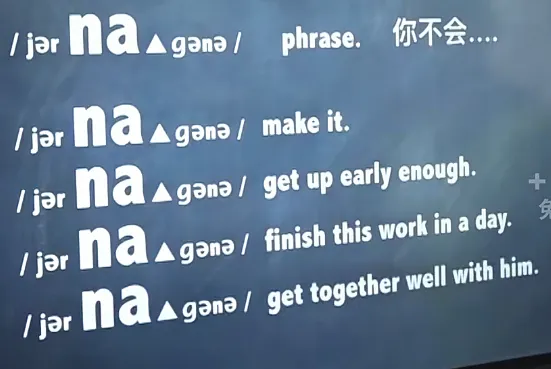
You're not gonna build a better horse carriage.
You're not gonna be that person.
They are not gonna buy the products.
Summary:否定句
- 主语 + be not going to + be + 名词 --- 上面那么多例句
- 主语 + be not going to + 动词短语 --- 一定要建立语音的印象,而不是只有文字印象
积累例句 > 记住语法
②没有规律,只有现象
以前学语法,喜欢“找规律”
比如:从I she he we they里面挑主语,然后再从动词里面am is are找一个配对,再加上动词
但是这根本没有学进去,文字表现上可能有些记忆,但是语音根本没有印象
好的学习方式就是:多多积累语音印象
比如:You are gonna xx
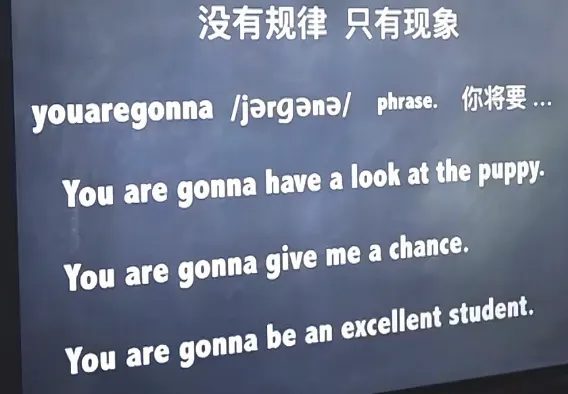
除此之外还有:
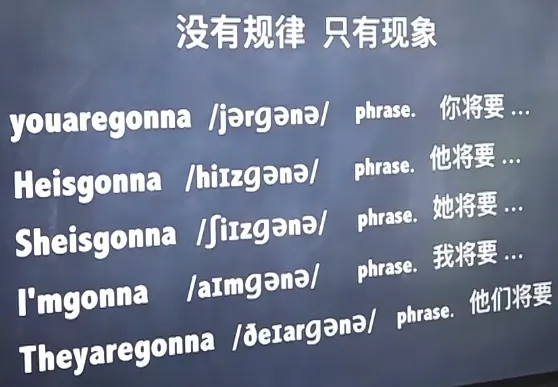
都当作“预案”一样储存在脑子里,用的时候才会快速 =》把这些“非重要/非实意”的部分掌握了,听别人说话就可以把注意力放在“实词/重要的部分”上
Practive
And that's gonna be a key support for me.
You're gonna be a mighty nation.
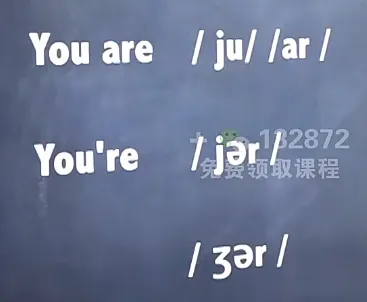
如上图所示,除了You are和You're的发音,还有这个jer也表示You're,这种就是因为说话人语速快或者发音不清楚,只能多积累
疑问句
先记住下面例句的“声音”:izi going tu xx // izi gene
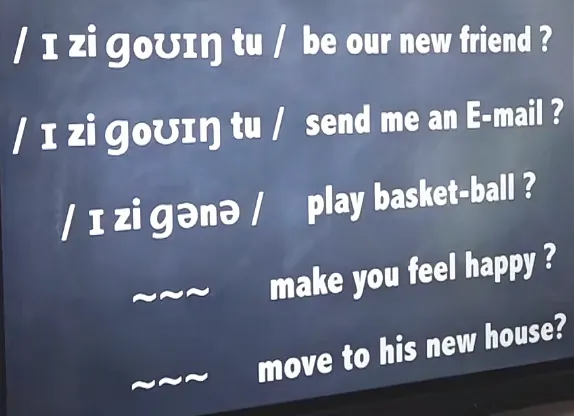
Practice 注意疑问句(提问)的语气 ~??
You know, is he gonna call me tomorrow?
Is she gonna be ok?
Is she gonna come out with the book this year? 出版一本书
文字上用 be前置和句尾的?提示这是疑问句,那在语音里面怎么提示的?
- 用语调提示! 这样就导致,用语气就能听出疑问句,那前面的be就“没意义”,所以读起来会更快!甚至于没有 =>
语调也有语义 - 书面语法通过结构识别,口头通过声音!这是两个训练内容
Is he going to get married soon?
Is he going to leave his present job.
Is he going to live with his parents.
Is he going to take the piano lesson tomorrow?
Is she gonna be all right?
Is she gonna pee on me? pee撒尿
特殊疑问句
在中文里面,给陈述句加上疑问效果最简单的方式就是加“吗?"
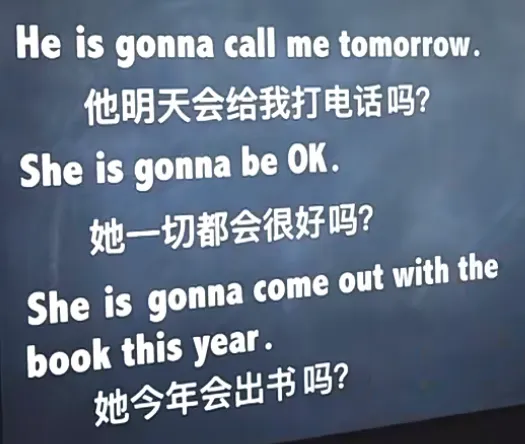
而英文的方式是,将be动词提前
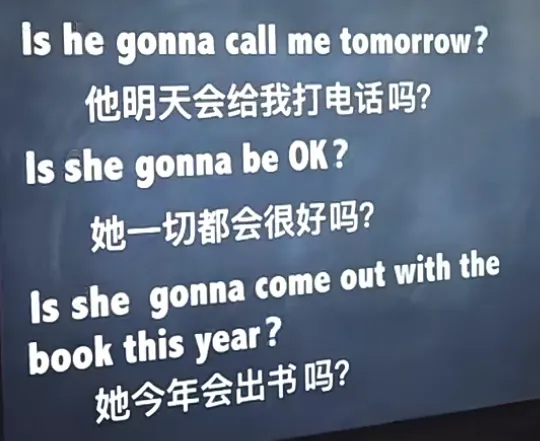
也就是说,英文起到疑问效果的词放到句子前面
一般疑问句可以用yes或者no回答,除了一般还有特殊疑问句(比如What's your name?)它的答案很明显不是yes or no
特殊疑问句必须用具体信息回答
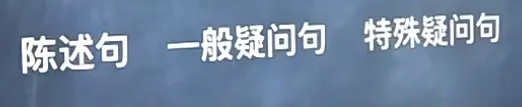
一般疑问句的基本句型的陈述句,而特殊疑问句的基本句型又是一般疑问句
例如 Is she gonna go to Marco? Is she gonna get up early tomorrow morning?
如果加一点东西?wer?
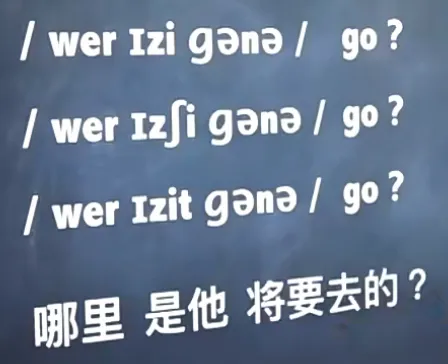
中文习惯把你家哪里、去哪里、目的地等疑问词放后面,而英文放开头,对比~
把声音还原成文字:Where is he gonna go?
Where is she gonna go?
Where is it gonna go?
Where are you gonna go?
现象比规律更重要:积累现象!
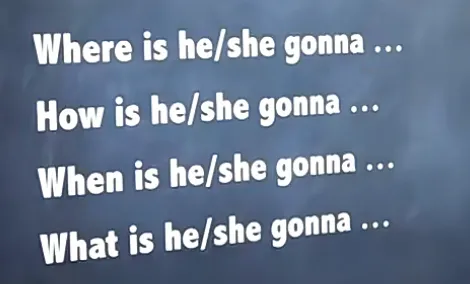
What is she gonna go?
What is she gonna notice?
What is he gonna touch?
过去学语法都是做这种书面练习:
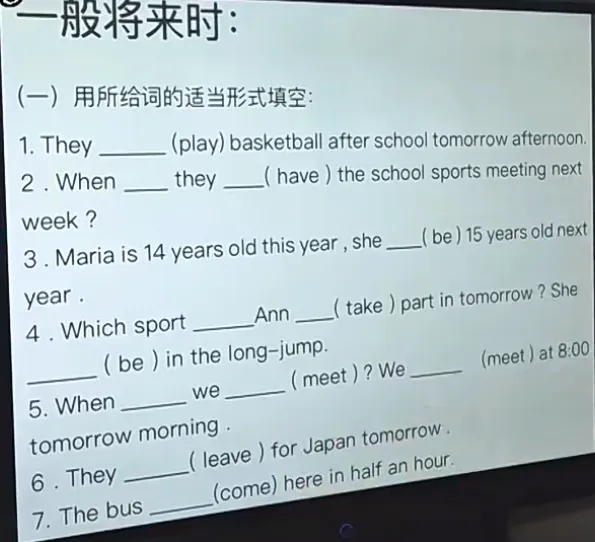
其实也不能说错,只是一种方法而已,书面学的时候自己把声音读出来就好
- are gonna play
- are they gonna have
- is gonna be
- is Ann gonna take; is gonna be
- are we gonna meet; are gonna meet
- are gonna leave
- is gonna come
回顾与总结
在英文中其实不存在将来时,只有现在时和过去时
例如I will take a bath. will是情态动词
- 这句话如果只看结构都可以把will 替换为 can /must/may,还是一般时
I am going to take a bath./ I am gonna take a bath.
其实动词都是用了现在时的时态
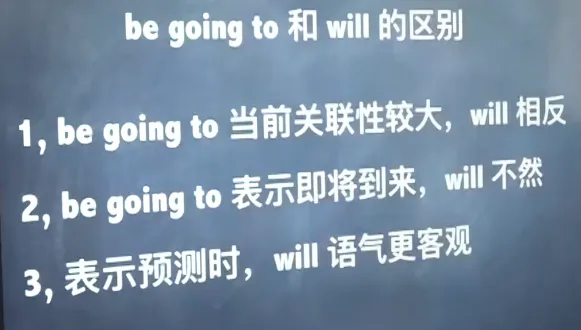
然后如果一定要区分be going to 和 will 区别,就是前者会更主观、更有情感;后者客观公正、理性
When are you going to tell your story. /whenar j/
When are you going to do the next one.
语音中体现语义,语义中蕴含语法 只有语法是最不重要的,关注语音!